






24/7 EMERGENCY SERVICE AVAILABLE

LogoLogoLogoLogoLogoLogoLogoLogoLogoLogoLogoLogoLogoLogoLogoLogoLogoLogoLogoLogoLogoLogoLogoLogoLogoLogoLogoLogoLogoLogoLogoLogoLogoLogoLogoLogoLogoLogoLogoLogo
Homeowner Troubleshooting Guide

Garage Door Opener Troubleshooting Guide

Is your garage door opener unresponsive, reversing unexpectedly, making unusual noises, or running without moving the door? This guide explains the most common opener problems, safe checks homeowners can perform, and when professional garage door opener repair is needed.

Updated July 2026 Homeowner Resource East Texas Service
New garage door opener professionally installed above a residential garage door
A properly installed and adjusted opener should move a balanced garage door smoothly and consistently.
Quick Answer

What Should You Check When a Garage Door Opener Stops Working?

Confirm the opener is plugged in, the circuit breaker and GFCI outlet have not tripped, the wall control is not in lock mode, and the remote batteries are working. If the door will not close, inspect the safety sensors for dirt, misalignment, damaged wiring, or an obstruction.

Check the ceiling outlet and breaker. Try the wall-mounted control. Replace remote and keypad batteries. Confirm lock mode is turned off. Clean and align the safety sensors. Listen for grinding, humming, or clicking.
Stop operating the opener if the garage door is crooked, unusually heavy, off track, or affected by a broken spring or loose cable. Those are door-system problems, not opener problems.
Start Here

What to Check Before Troubleshooting the Opener

Make sure the physical garage door is safe before testing opener controls or adjustments.

1

Inspect the Garage Door

Do not troubleshoot the opener while the door is crooked, off track, unusually heavy, or showing spring or cable damage.

2

Check the Manual Lock

Confirm an interior slide lock is not extending into the track before operating the opener.

3

Remove Doorway Obstructions

Clear tools, toys, vehicles, debris, and other objects from the door’s path.

4

Watch and Listen

Notice whether the opener hums, clicks, grinds, flashes its lights, or begins moving before stopping.

5

Try More Than One Control

Test the wall control, handheld remote, wireless keypad, and connected app when available.

6

Avoid Repeated Testing

Repeatedly cycling a malfunctioning opener can overheat the motor or worsen gear, trolley, belt, chain, or rail damage.

Common Opener Problem

Garage Door Opener Has No Power

If the opener makes no sound, shows no lights, and does not respond to any controls, begin with the electrical supply.

Opener Is Unplugged

Confirm the opener’s power cord is fully connected to the ceiling outlet.

Tripped Circuit Breaker

Check the electrical panel for a tripped garage or opener circuit.

Tripped GFCI Outlet

A GFCI outlet elsewhere in the garage may control the opener outlet.

Failed Ceiling Outlet

Test the outlet with another safe electrical device when appropriate.

Damaged Power Cord

Stop using the opener if the cord is cut, burned, frayed, or loose.

Internal Electrical Failure

A failed transformer, logic board, wiring connection, or motor component may prevent startup.

Quick Power Diagnosis

Symptom Possible Cause Next Step
No lights or sound Outlet, breaker, GFCI, cord or internal power failure Verify electrical supply
Outlet works but opener is dead Logic board, transformer, wiring or motor failure Schedule professional diagnosis
Opener loses power intermittently Loose connection, failing outlet or internal component Stop repeated testing
Opener Controls

Remote, Wall Button and Keypad Problems

Testing each control separately can help determine whether the problem involves batteries, programming, lock mode, wiring, or the opener’s receiver.

Wall Button Works but Remote Does Not

  • Replace the remote battery.
  • Confirm the remote is programmed.
  • Check for radio interference.
  • Try another compatible remote.

Remote Works Only Up Close

  • Replace weak batteries.
  • Check the opener antenna.
  • Remove interfering LED bulbs.
  • Test from several locations.

Wall Button Does Not Work

  • Check for loose low-voltage wiring.
  • Inspect the button for damage.
  • Confirm the opener still has power.
  • Test another control.

Wireless Keypad Does Not Respond

  • Replace the keypad battery.
  • Re-enter the PIN carefully.
  • Check keypad programming.
  • Inspect for weather damage.

Lock Mode Is Activated

  • Remote controls may stop responding.
  • The wall button may still operate the door.
  • Look for a lock indicator light.
  • Disable lock mode according to the manufacturer.

All Wireless Controls Fail

  • Receiver or logic-board failure is possible.
  • Programming may have been erased.
  • Nearby interference may block signals.
  • Professional testing may be needed.
Safety System

Garage Door Opener Safety Sensor Problems

Photo-eye sensors are mounted near the bottom of the tracks and prevent the opener from closing the door when an obstruction is detected. Dirt, misalignment, damaged wiring, sunlight, loose brackets, or sensor failure can interrupt the safety beam.

Door starts closing and reverses Check the sensor beam and doorway.
Opener lights flash The flash pattern may indicate a sensor or wiring fault.
Sensor light is blinking The sensors may be misaligned or obstructed.
One sensor has no light Power, wiring, connection, or sensor failure is possible.
Safe homeowner checks include cleaning the lenses, removing obstructions, confirming the brackets are not visibly bent, and checking for loose or damaged low-voltage wiring.
Garage door technician inspecting the bottom of a garage door for a possible safety sensor issue
Drive-System Problem

Opener Runs but the Garage Door Does Not Move

If the motor runs but the door remains stationary, the opener may be disconnected from the door or have a trolley, carriage, gear, belt, chain, or internal drive failure.

Emergency Release Is Disconnected

The trolley may no longer be connected to the opener carriage after the emergency-release cord was pulled.

Broken Trolley or Carriage

The rail mechanism may move without transferring force to the door.

Stripped Internal Gear

The motor may run while a worn gear prevents the drive system from moving.

Broken Belt or Chain

A separated belt or broken chain prevents the trolley from traveling.

Loose Drive System

Excessively loose chain or belt tension can cause slipping or poor trolley movement.

Door Is Too Heavy

A broken spring or binding door can prevent movement even when the opener is trying to run.

If the garage door feels unusually heavy, do not continue operating the opener. Review the Garage Door Springs Guide or schedule professional service.
Movement Problems

Garage Door Reverses, Stops or Changes Direction

Reversing and stopping can result from sensor problems, incorrect travel limits, force settings, mechanical resistance, or an opener that is detecting excessive strain.

Reverses Before Touching the Floor

Safety sensors, travel limits, force settings, or physical resistance may be causing the reversal.

Touches the Floor and Reopens

The down-travel limit may be set too far, causing the opener to detect the floor as an obstruction.

Stops While Opening

The opener may be sensing excessive door weight, track resistance, motor strain, or an incorrect travel limit.

Moves Only While Holding the Wall Button

This commonly points to a safety-sensor alignment, wiring, or sensor failure problem.

Never increase opener force simply to overcome a heavy, crooked, or binding garage door. Correct the physical door problem first.
Technician checking the tension of a chain-drive garage door opener
Drive System

Chain, Belt, Rail and Trolley Problems

The opener motor transfers movement through a chain, belt, screw, or rail system. Excessive tension, looseness, wear, damage, or misalignment can cause noise, slipping, jerking, or failure to move the door.

  • Loose chain hanging below the rail.
  • Overtightened chain causing excessive strain.
  • Frayed, cracked, or separated belt.
  • Damaged trolley or carriage.
  • Bent or loose opener rail.
  • Grinding or jumping during trolley travel.
Compare Belt Drive vs. Chain Drive Openers
Do not tighten a chain or belt until the opener model, correct tension, rail condition, trolley position, and door balance have been checked.
Internal Opener Problems

Motor, Gear, Capacitor and Logic-Board Symptoms

Internal opener failures often require model-specific testing and replacement parts.

Motor Hums but Does Not Start

A failed capacitor, seized motor, jammed drive system, or excessive door resistance may prevent startup.

Grinding Inside the Motor Housing

Worn internal gears or drive components may be slipping or stripping.

Opener Starts and Stops Randomly

Overheating, logic-board failure, loose wiring, or motor protection may interrupt operation.

Lights or Controls Behave Erratically

Logic-board damage, power surges, moisture, or wiring problems may affect electronic controls.

Burning Smell or Visible Smoke

Disconnect power when safe and stop using the opener immediately.

Repeated Clicking

Relays, controls, sensors, or electronics may be trying to start without completing the command.

Connected Garage

Wi-Fi, Camera and myQ Connection Problems

Smart garage door openers may continue operating from the wall control even when their Wi-Fi connection, camera, app, notifications, or cloud features are unavailable.

Opener will not connect to Wi-Fi

Check network strength, password, router band, and setup mode.

myQ app shows the opener offline

Confirm the opener has power and the home internet is working.

Camera feed will not load

Check Wi-Fi strength, camera settings, power, and app permissions.

Notifications are delayed

Review phone permissions, app settings, internet connection, and account status.
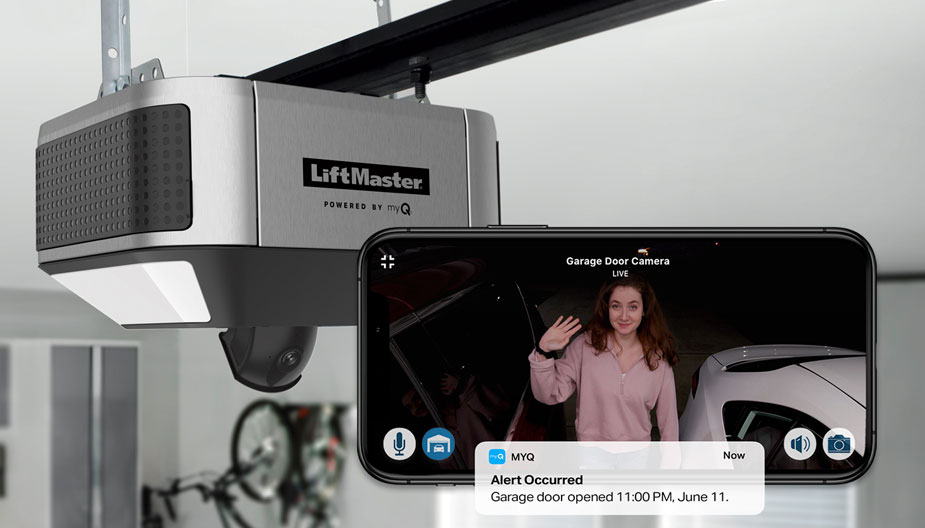
LiftMaster smart garage door opener with phone displaying the opener camera view
Repair Decision

Should You Repair or Replace the Garage Door Opener?

The best option depends on the opener’s age, condition, available parts, safety features, drive system, and repair cost.

Repair May Make Sense When

  • The opener is relatively new.
  • The problem is limited to one replaceable part.
  • Compatible parts are readily available.
  • The rail and drive system are in good condition.
  • Current safety features are working properly.

Replacement May Make Sense When

  • The opener is old or repeatedly failing.
  • Parts are discontinued or unavailable.
  • The logic board and motor are both damaged.
  • The opener lacks modern safety or smart features.
  • Repair costs approach replacement cost.
Homeowner Questions

Common Garage Door Opener Troubleshooting Questions

Why does my opener work from the wall button but not the remote?

The remote may have a weak battery, lost programming, radio interference, or a damaged transmitter.

Why does the opener light flash when the door will not close?

Flashing lights often indicate a safety-sensor, wiring, travel, or diagnostic-code problem.

Why does the motor run but the chain does not move?

Internal gears, the sprocket, motor shaft, chain connection, or drive assembly may have failed.

Can LED bulbs interfere with garage door remotes?

Certain bulbs can create radio-frequency interference and reduce remote range.

Why does my opener keep losing its travel settings?

Logic-board problems, power interruptions, encoder issues, or improper programming may cause settings to reset.

Should the opener lift a door with a broken spring?

No. The opener should move a properly balanced door and should not be used to lift the full door weight.

Why is the opener chain sagging?

Normal chain movement, incorrect tension, wear, rail problems, or trolley position may affect chain sag.

When should I call a technician?

Schedule service for internal electrical failures, repeated grinding, sensor wiring damage, drive-system failure, or unresolved problems.

Frequently Asked Questions

Garage Door Opener FAQ

Select a question to view the answer.

Why is my garage door opener not responding?

Check the opener’s power supply, circuit breaker, GFCI outlet, wall control, remote battery, lock mode, and programming. Internal electrical failure may require professional diagnosis.

Why does my garage door opener reverse before closing?

Common causes include blocked or misaligned safety sensors, incorrect travel limits, excessive resistance, or a physical garage door problem.

Why does my opener run without moving the door?

The emergency release may be disconnected, or the trolley, carriage, belt, chain, gear, or internal drive system may be damaged.

Why does my opener work only when I hold the wall button?

This often indicates a safety-sensor alignment, wiring, obstruction, or sensor failure problem.

Can I adjust the opener force myself?

Minor manufacturer-approved adjustments may be possible, but force should never be increased to overcome a heavy, binding, crooked, or damaged garage door.

How long should a garage door opener last?

Service life varies with usage, maintenance, installation quality, environment, available parts, and the condition of the garage door.

Should I repair or replace an old garage door opener?

Repair may make sense for a newer opener with a single replaceable failure. Replacement may be better when parts are unavailable, failures are repeated, or modern safety and smart features are desired.

Does Dynamic Door Service inspect the garage door too?

Yes. Every service visit includes a full safety inspection of the garage door system because opener performance depends on a safe, properly balanced door.

Professional Opener Service

Still Having Trouble With Your Garage Door Opener?

Dynamic Door Service can diagnose opener power problems, controls, remotes, keypads, safety sensors, travel settings, drive systems, motors, gears, logic boards, Wi-Fi connections, cameras, and smart opener features.

Every service visit includes a full garage door safety inspection because an opener cannot operate properly when the physical door is heavy, crooked, binding, off track, or poorly balanced.

Schedule Opener Repair

Hours:

Mon – Sun 8:00am-6:00pm

24/7 Emergency Service Available

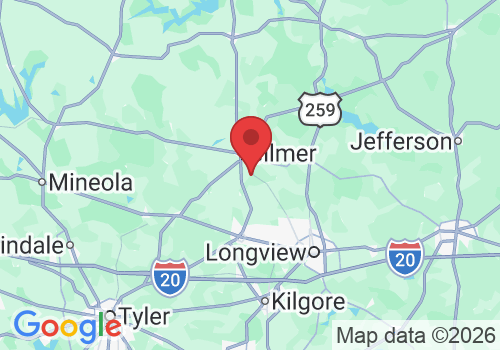
1613 Dove Rd, Gilmer, TX 75645, USA

COMPANY

CUSTOMER CARE

SERVING

Gilmer

Longview

Pittsburg

Marshall

And Surrounding Areas

FOLLOW US

LEGAL

Copyright 2026. DYNAMIC DOOR SERVICE TX LLC. All Rights Reserved.