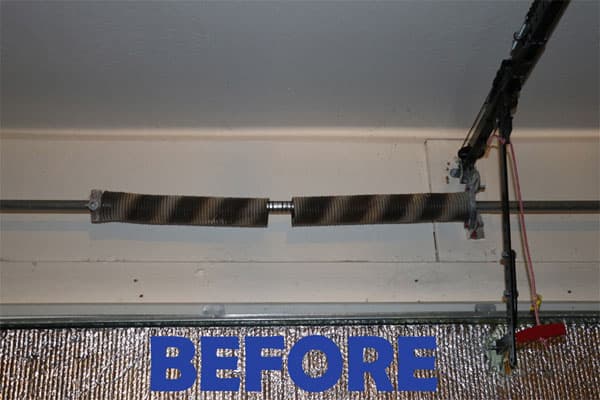
Visible Gap in the Spring
A separated coil on a torsion spring is one of the clearest signs that the spring has broken.







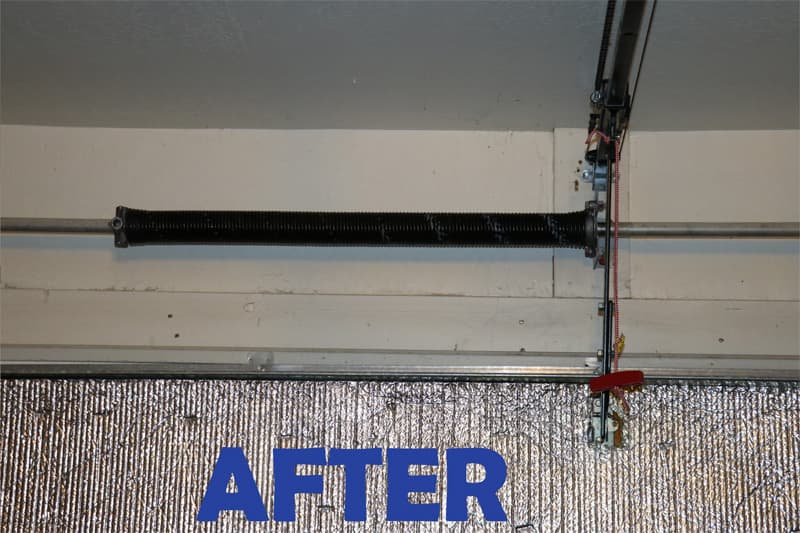
A broken or weakened garage door spring can leave the door unusually heavy, crooked, difficult to open, or unable to move normally. Dynamic Door Service inspects the spring system, door balance, cables, drums, hardware and opener before replacing the spring and returning the system to service.
Garage door spring systems store significant mechanical energy. Spring adjustment and replacement require proper tools and procedures.
Common signs include a visible gap in a torsion spring, a garage door that suddenly feels much heavier, a door that will not open normally, uneven movement, loose cables, or a loud snap or bang when the spring fails.
A separated coil on a torsion spring is one of the clearest signs that the spring has broken.
Springs counterbalance much of the door's weight. When spring assistance is lost, the difference can be noticeable.
The opener may strain, stop, or be unable to lift the door when the spring system is no longer providing proper assistance.
Depending on the spring and cable configuration, spring failure can contribute to uneven or abnormal door movement.
Read current customer feedback about garage door repairs, spring service, openers, new garage doors and other Dynamic Door Service visits.
Garage doors use different spring configurations depending on the door, hardware, available space, weight and original system design. The replacement spring needs to match the actual door and spring system.
Torsion springs are mounted on a shaft above the garage-door opening. As the spring winds and unwinds, it provides torque that helps counterbalance the weight of the door.
Extension springs are generally located alongside the horizontal tracks. They stretch as the door closes and contract as the door opens to assist with lifting.
Every complete opening and closing of the garage door uses another spring cycle. Actual spring life depends on spring design, door use, system setup, environment and other operating conditions. Higher-cycle spring options may be appropriate for some frequently used doors.
The replacement spring must work with the weight and configuration of the garage door. After installation, the door also needs to operate and balance correctly as a complete system.
We identify the spring configuration and inspect the door, cables, drums, tracks, hardware and opener for related conditions.
Spring selection is based on the actual door and system rather than simply matching the appearance of the old spring.
The failed or worn spring is removed and the appropriate replacement is installed using proper spring-service procedures.
The spring system is adjusted so the garage door receives the proper lifting assistance through its travel.
We test the completed door system and applicable opener and safety functions before the visit is completed.
On a matched two-spring system, both springs have usually experienced similar operating cycles. We evaluate the complete spring system and explain the appropriate replacement approach for the specific door.
Higher-cycle spring options may be appropriate for some frequently used residential or commercial doors. The correct option depends on the door, spring configuration and available spring specifications.

When a spring fails, the rest of the garage-door system may have been operating under changing loads or may have existing wear of its own. We inspect applicable components so you understand the condition of the complete door.
We check how the spring system is supporting the weight and movement of the door.
Lift cables and drums are checked for visible wear, damage and proper operation.
Moving hardware and track condition are inspected for resistance or abnormal wear.
Brackets, hinges, fasteners and related components are checked.
Applicable opener operation is checked after the door system is operating correctly.
Applicable photo eyes and reversing functions are included in the overall system check.
If the garage door itself is structurally sound, spring replacement is often a repair to the existing door system rather than a reason to replace the entire door.
If inspection also finds severe door damage, widespread deterioration, repeated major failures, or the customer already wants improved insulation or a different door design, we can also discuss complete garage-door replacement.

Common signs include a visible gap in a torsion spring, a door that suddenly feels much heavier than normal, a door that will not open correctly, uneven movement, loose cables, or a loud snap or bang when the spring fails.
Continuing to operate a garage door with a failed spring can place additional strain on the opener and other components. If the door has become unusually heavy, crooked, or difficult to move, stop operating it and have the spring system inspected.
Torsion springs are generally mounted on a shaft above the door and use rotational force to help counterbalance the door. Extension springs are generally located along the horizontal tracks and stretch and contract as the door operates.
On a matched two-spring system, both springs have typically experienced similar operating cycles. We inspect the complete system and explain the appropriate replacement approach for the specific garage door.
Garage door springs are rated by operating cycles rather than a guaranteed number of years. Actual life depends on spring design, how frequently the door is used, the condition and balance of the system, environment, and other operating factors.
Higher-cycle spring options may be available and appropriate for some high-use residential or commercial garage doors. The correct option depends on the door and spring configuration.
Garage door springs and related components can store significant mechanical energy. Spring winding, adjustment and replacement require the correct tools, procedures and understanding of the garage-door system. Professional spring service is recommended.
Usually not. If the garage door itself is structurally sound, the spring system can often be repaired without replacing the entire door. If the door also has severe damage or deterioration, we can explain repair and replacement options separately.
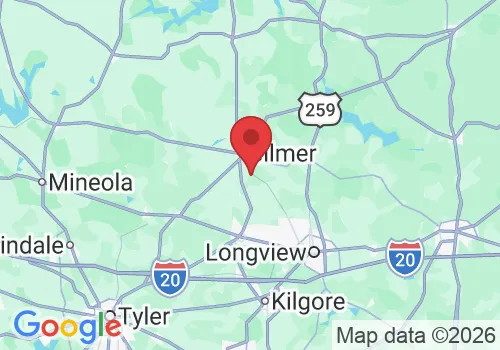
Dynamic Door Service provides garage door spring repair and replacement throughout East Texas, including Gilmer, Longview, Pittsburg, Marshall and many surrounding communities. Call 903-364-6364 with your location to confirm current service availability.
Learn how garage-door spring systems work, what common symptoms mean, and how spring problems can affect the rest of the door.
Learn about spring systems, common failures, warning signs and maintenance considerations.
Read the guide → ComparisonCompare how the two common residential garage-door spring systems operate.
Read the comparison → TroubleshootingLearn why springs are only one of several possible causes when a door stops opening normally.
Read the guide → Related ProblemUnderstand how spring, cable and drum problems can affect each other.
Read the guide → MaintenanceLearn what homeowners can inspect and maintain and which components should be left to professional service.
Read the guide → SafetyLearn about spring tension, cables, moving doors, safety devices and other important garage-door hazards.
Read the guide →Dynamic Door Service provides broken-spring repair and garage-door service throughout a broad East Texas service area—not only the cities highlighted below.
Torsion and extension spring repair, door-balance correction and related garage-door service for residential properties.
Spring-system evaluation for frequently used residential and qualifying commercial garage doors.
Cables, drums, rollers, tracks, hardware and opener operation can be inspected when a spring failure affects the complete door system.
If your garage door suddenly became heavy, will not open normally, is moving unevenly, or has a visible broken spring, Dynamic Door Service can inspect the system and determine the appropriate repair.
Copyright 2026. DYNAMIC DOOR SERVICE TX LLC. All Rights Reserved.


