1
Can I Keep Using My Garage Door if Something Seems Wrong?
It depends on whether the problem is cosmetic or affects the movement,
support, alignment, or balance of the door.
A small surface dent that does not change how the door moves may not
require immediate service. However, a door that rubs, jerks, becomes
crooked, feels heavy, or makes new grinding or popping sounds should
not be ignored.
Stop using the door when:
- It moves differently than it normally does.
- One side rises or lowers before the other.
- A cable, roller, hinge, or track appears damaged.
- The door shakes, twists, binds, or hangs unevenly.
- You must force the door to make it move.
2
Why Did My Garage Door Suddenly Become Heavy?
A properly functioning garage door should be supported by its
counterbalance system. When disconnected from the opener, it should
not feel like you are lifting the full weight of the door.
Sudden heaviness commonly points to a spring-related problem, but
cables, rollers, tracks, hinges, and damaged sections can also prevent
the door from moving freely.
Possible causes include:
- A broken or weakened garage door spring.
- A cable that has slipped, loosened, or become damaged.
- A roller binding inside a damaged track.
- A bent hinge or damaged door section.
- Mechanical resistance on one or both sides of the door.
Do not force a heavy garage door open or rely on the opener to lift it.
The opener is designed to move a balanced door, not replace the spring
system.
3
Why Does My Garage Door Stop at the Same Spot Every Time?
A door that repeatedly stops, sticks, or jerks at the same height may
have a mechanical obstruction or damaged component at that location.
Watch the door from a safe distance and note whether the resistance
occurs as a particular roller, hinge, or section reaches the curved
track.
Common causes include:
- A dented, pinched, or misaligned track.
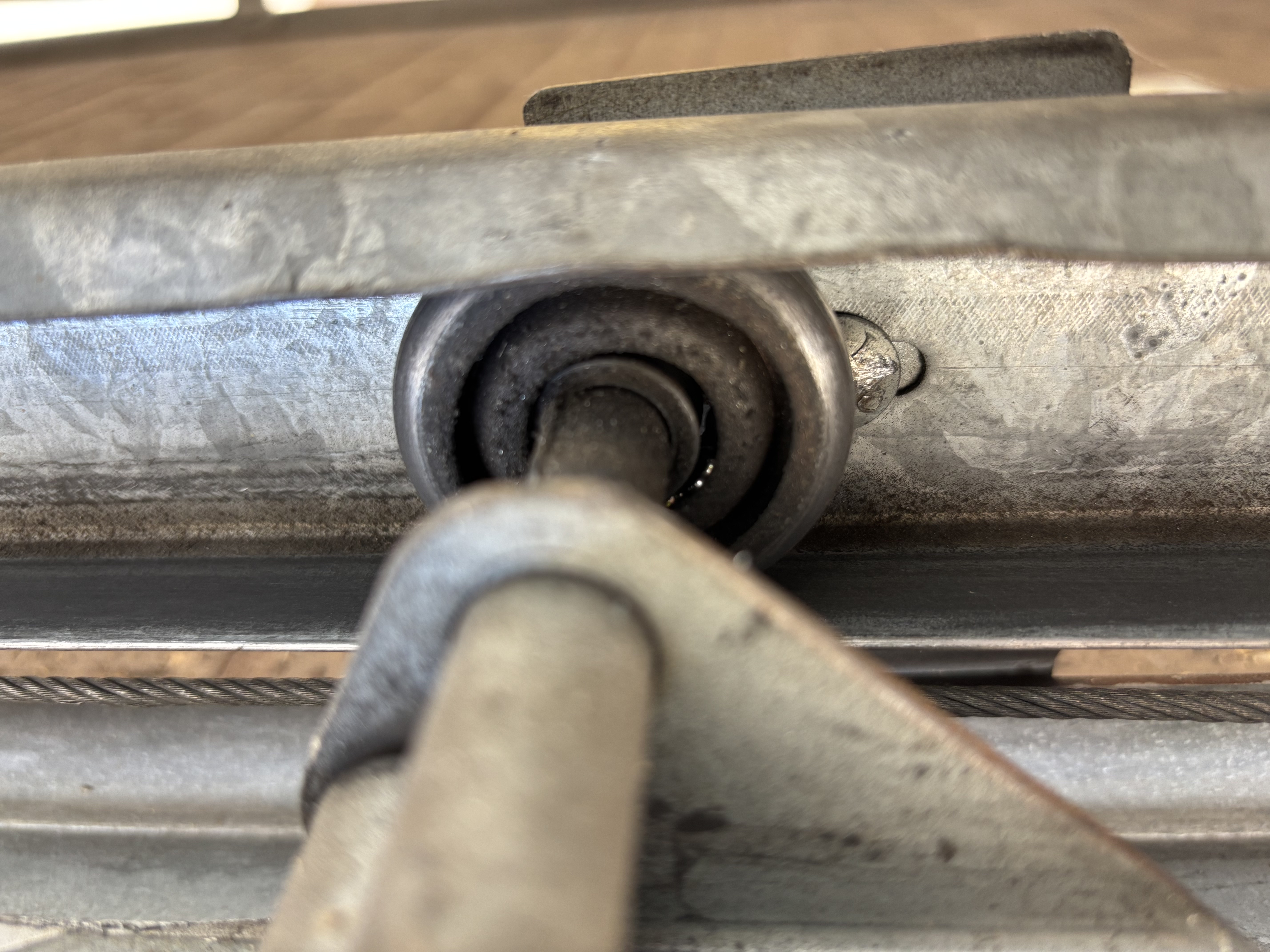
- A cracked, worn, or seized roller.
- A bent roller stem or damaged hinge.
- A damaged section rubbing as it bends overhead.
- Debris or hardened buildup inside the track.
The stopping point is useful diagnostic information. Do not continue
cycling the door if the roller is binding or the section is folding.
4
Why Is My Garage Door Crooked or Uneven?
A crooked garage door usually means the left and right sides are no
longer moving together. This can place uneven pressure on the tracks,
rollers, hinges, panels, cables, and opener.
A door may look level while closed but become uneven as it opens, or
one bottom corner may remain higher than the other.
Possible causes include:
- A loose, damaged, or displaced cable.
- A roller that has left the track.
- A bent or loose track assembly.
- A broken hinge or damaged section.
- A problem within the counterbalance system.
Do not pull, push, or force a crooked garage door into position. The
door may shift suddenly or become further damaged.
5
Can I Open a Damaged Garage Door Manually?
Many garage doors can be operated manually after the opener is
disconnected with the emergency release. However, disconnecting the
opener is not safe in every situation.
The opener may be the only component currently preventing a badly
unbalanced or damaged door from moving unexpectedly.
Do not pull the emergency release when:
- The door is open and appears unstable.
- The door is crooked or hanging unevenly.
- A spring may be broken.
- A cable is loose, frayed, or off its drum.
- A roller has left the track.
- The door feels unusually heavy.
If the door must be moved because a vehicle is trapped, professional
assistance is the safer option when any of these conditions are
present.
6
Will Lubricating the Garage Door Fix the Noise?
Lubrication may reduce normal squeaking or dry bearing noise, but it
will not repair a broken, bent, loose, or worn component.
Identify the location and type of noise before applying lubricant.
Grinding, repeated popping, sharp cracking, or metal scraping may
indicate damage that lubrication cannot correct.
Lubrication may help:
- Hinge pivot points
- Roller bearings
- Bearing plates
- Lightly dry spring coils
Lubrication will not fix:
- Bent tracks
- Cracked hinges
- Loose cables
- Damaged rollers
Do not pack the garage door tracks with heavy grease. The roller path
should remain clean so it does not collect dirt and debris.
7
Is It Safe to Repair Garage Door Parts Myself?
Homeowners can usually perform basic visual inspections, clean loose
debris from accessible areas, and complete simple maintenance without
disassembling the door.
Repairs involving stored spring tension, heavy door sections, lifting
cables, or bottom fixtures present substantially greater risk.
Lower-risk tasks:
- Visual inspection
- Cleaning loose debris
- Checking visible fasteners
- Approved lubrication
Professional repair:
- Springs
- Cables and drums
- Bottom brackets
- Off-track doors
Do not loosen or remove a garage door bottom bracket. The lifting
cable is commonly attached to this bracket and may be under
significant tension.
8
Can a Garage Door Fall if a Cable Breaks?
Garage door cables help transfer spring force and support the door as
it moves. When one cable breaks or comes loose, the remaining side may
continue pulling while the damaged side drops or stops moving.
This can cause the door to become crooked, wedge inside the tracks, or
place abnormal force on the remaining hardware.
Possible cable failure signs:
- A loose cable hanging beside the door.
- Cable wrapped incorrectly around a drum.
- One bottom corner sitting lower than the other.
- The door rising on only one side.
- A cable with visible fraying or broken strands.
Keep people, pets, and vehicles away from a door with a broken or
displaced cable. Do not attempt to straighten the door manually.
9
Should I Repair or Replace My Garage Door?
Repair is often practical when the damage is isolated, the door
remains structurally sound, and compatible replacement parts are
available.
Replacement may provide better long-term value when the door has
widespread damage, severe corrosion, several failing sections, or
discontinued components.
Repair may make sense when:
- One component has failed.
- Damage is limited to one area.
- The door is otherwise in good condition.
- Matching parts are available.
Replacement may make sense when:
- Several sections are damaged.
- Corrosion is widespread.
- Parts are unavailable.
- Repairs approach replacement cost.
The best option depends on the condition, age, construction, and
repairability of the entire door—not only the most visible damage.
10
When Should I Call a Garage Door Technician?
Professional service is recommended when the door is unsafe to move,
the cause is unclear, or the repair involves heavy components or
stored spring tension.
Schedule garage door service for:
- A broken spring or suddenly heavy door.
- A loose, frayed, or displaced cable.
- A roller outside the track.
- A crooked or off-track garage door.
- A bent track or broken hinge.
- A folding, cracked, or separating section.
- Repeated grinding, popping, or binding.
- Damage caused by a vehicle impact.
Prompt inspection can help prevent one failed part from damaging
additional components.
Complete System Diagnosis
One Garage Door Symptom Can Have Several Possible Causes
Homeowners usually notice the result of a problem rather than the
failed component itself. A crooked door may begin with a cable issue,
damaged roller, loose hinge, bent track, or weakened section. A loud
noise may come from dry hardware, but it may also indicate a cracked
hinge, seized roller, shifting track, or damaged panel.
A proper diagnosis considers how the tracks, rollers, hinges, cables,
springs, panels, reinforcement, and opener work together. Repairing
only the most obvious symptom may allow the original cause to remain.
✓
Inspect the visible problem
Identify the damaged or malfunctioning component.
✓
Determine what caused it
Check for alignment, balance, impact, or related hardware issues.
✓
Check connected components
Confirm the original failure did not create additional damage.
✓
Verify safe operation
Test movement, alignment, support, and overall door condition.