Significant Door Weight
Garage doors are large and heavy. The spring system normally supports much of that weight, but a broken or improperly balanced system may allow the door to drop, bind, or become difficult to control.








Learn how to operate, inspect, and test your garage door safely, recognize dangerous warning signs, protect children and pets, and know when to stop using the door and call a professional.
Use the links below to jump directly to a safety topic or test.
Keep people, pets, vehicles, and objects clear whenever the garage door is moving. Never walk, run, drive, or reach beneath a closing door. Test the photo-eye sensors and contact-reversal system monthly, keep controls away from children, and stop using the door when it becomes crooked, heavy, damaged, or unreliable.
A residential garage door may look simple, but it relies on several connected mechanical and electrical systems. Damage or failure in one part can affect the movement, balance, support, and automatic operation of the entire door.
Garage doors are large and heavy. The spring system normally supports much of that weight, but a broken or improperly balanced system may allow the door to drop, bind, or become difficult to control.
Torsion and extension springs store mechanical energy. Springs, winding cones, cable drums, lift cables, and bottom brackets should never be loosened or adjusted without professional training and tools.
Section joints, rollers, tracks, hinges, opener arms, and the space beneath the door can create pinch, crush, cut, or entrapment hazards while the system is moving.
A remote, keypad, wall control, vehicle control, timer, or connected device may activate the opener. Never assume a stationary door will remain stationary when people are nearby.
Rollers, hinges, cables, bearings, tracks, brackets, and fasteners can wear or loosen over time. Continued operation may turn a minor defect into a dangerous failure.
Misaligned sensors, damaged wiring, incorrect opener settings, or a failed reversal system can prevent the door from responding properly when an obstruction enters its path.
These habits should be followed by everyone who lives in, visits, or works around a home with an automatic or manually operated garage door.
Confirm that people, children, pets, vehicles, bicycles, tools, and stored objects are clear before operating the door.
Keep the moving door in sight until it is completely open or closed. Do not activate it and immediately walk away.
Do not run, walk, drive, or reach beneath a moving garage door, regardless of whether the safety sensors appear to work.
When operating the door manually, use installed handles or suitable gripping points. Keep fingers away from section joints, tracks, and rollers.
Never allow anyone to sit, stand, climb, hang, or ride on a garage door, bottom section, handle, reinforcement, or opener arm.
Never tape sensors together, aim them away from the opening, bypass wiring, defeat warning systems, or continue using an opener with a failed reversal system.
Inspect the door monthly, test the opener’s safety systems, and schedule professional maintenance and a full safety inspection once a year.
New noise, crooked movement, unusual weight, damaged sections, loose cables, or unreliable operation should be evaluated before the door is used again.
Children may view a moving garage door as a toy, race, climbing surface, or shortcut. Adults should set clear rules and control access to every device that can operate the door.
Wall controls should be mounted at least five feet above floors, steps, landings, or nearby walking surfaces and where the user can see the door.
Keep handheld remotes away from children. Do not treat a remote, vehicle button, keypad code, or phone app as a toy.
Children should never race beneath, touch, climb, ride, or play near a garage door while it is opening or closing.
Confirm pets are fully inside or outside before moving the door. A photo-eye beam may not detect every position or movement.
Teach older children that keypad codes, remotes, and connected opener access should only be used with permission.
Do not allow children to operate the emergency release or manually lift and lower the garage door.
A short safety check before opening or closing the door can prevent damage and reduce the risk of someone entering the door’s path.

Photo-eye sensors monitor the opening near the floor. When the beam is interrupted while the door is closing, the opener should stop and reverse the door.
The contact-reversal test checks whether the opener reverses after the bottom of the garage door contacts an obstruction.

A garage door that closes through the photo-eye beam or fails to reverse on a flat 2×4 should not continue operating automatically. Dynamic Door Service can inspect the opener, sensors, wiring, door balance, and related hardware.
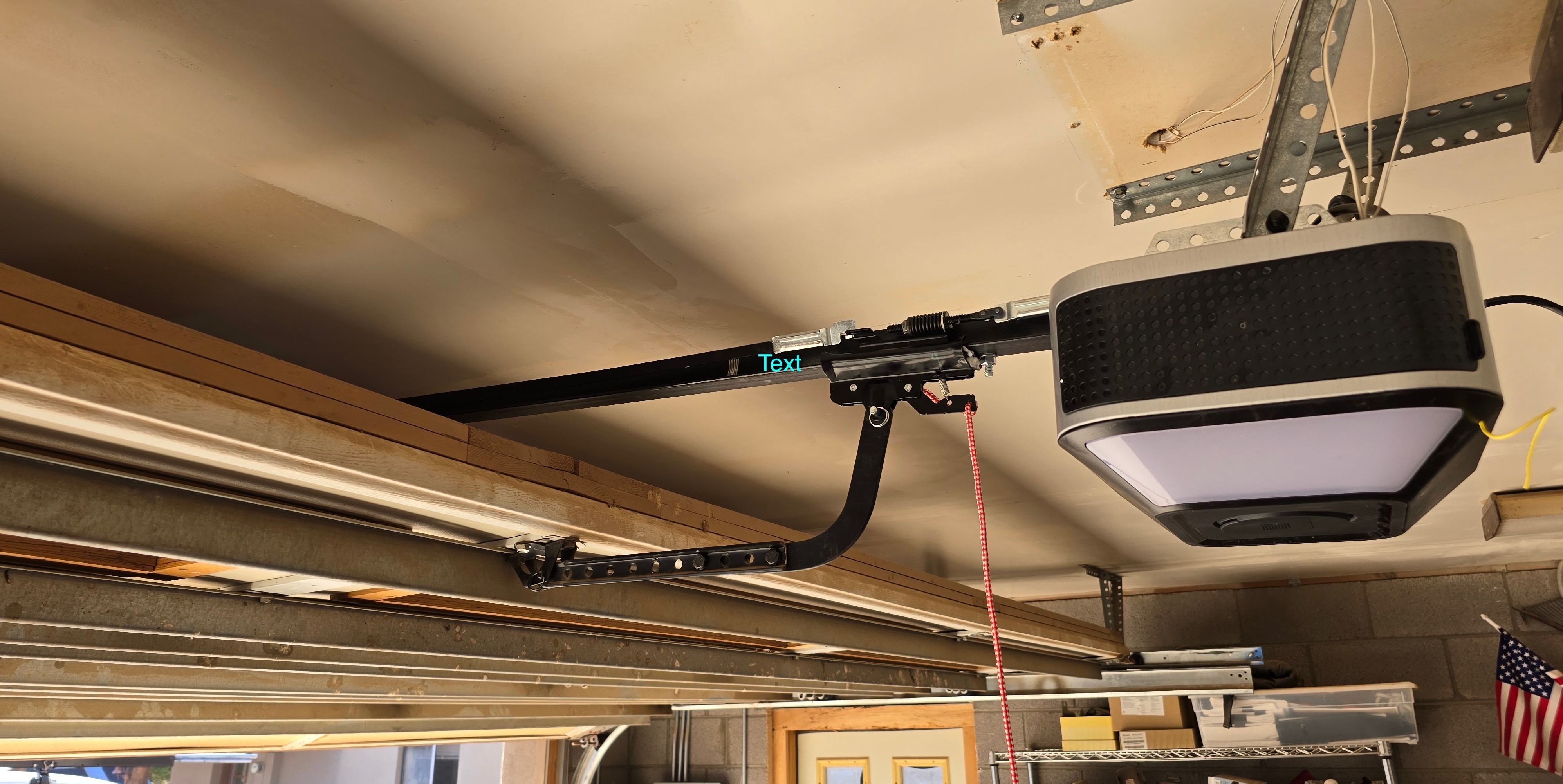
The red emergency-release cord disconnects the garage door from the automatic opener so the door can be operated manually. Pulling it at the wrong time may allow an unbalanced or damaged door to move unexpectedly.
These parts support and control the weight of the garage door. They may remain under significant tension even when the door is closed and should only be serviced by a trained garage door technician.


Do not insert tools into winding cones, loosen set screws, stretch extension springs, or attempt to replace a spring without appropriate training and equipment.
Do not pull, cut, clamp, rewrap, or reposition a cable that is frayed, loose, off the drum, or under tension.
Do not loosen a cable drum or its set screws. Drum position and cable tension affect the balance and level movement of the door.
Lift cables commonly attach near the bottom brackets. Never remove or loosen these brackets while the spring and cable system is tensioned.
Worn or seized bearings can create noise and resistance, but parts near the torsion shaft should be evaluated professionally.
Do not force a door that is hanging unevenly. Additional movement may pull another cable loose or cause rollers to leave the tracks.
Dynamic Door Service provides professional garage door spring, cable, drum, roller, and track repair throughout East Texas.
Keep hands, fingers, clothing, hair, tools, and body parts away from all moving components. Never reach into the system while the door or opener is operating.
Section joints may narrow as the door bends through the tracks. Use installed handles rather than gripping the section edges.
Keep hands away from rollers, hinges, track openings, and the space where curved and vertical tracks meet.
Never stand, sit, kneel, work, or place a body part beneath an open, closing, or unsupported garage door.
Keep clear of the opener rail, trolley, attachment bracket, and connecting arm while the opener is energized.
The bottom brackets and cable attachment areas may be under tension. Inspect visually without touching or loosening the hardware.
Keep fingers and tools away from the edges of the moving door where it passes the jambs, header, weather seals, and track assemblies.
Modern residential garage door openers use entrapment-protection systems designed to detect obstructions and reverse a closing door. Older openers may lack photo-eye sensors, may depend on outdated technology, or may no longer respond reliably.
Continuing to operate a damaged or unstable garage door can increase the damage and place people, vehicles, property, and the opener at risk.
A visible gap in a torsion spring, hanging extension spring, or sudden loss of lifting support requires professional repair.
Do not touch a cable that is loose, frayed, off the drum, hanging, or wrapped incorrectly.
One side sitting higher than the other may indicate a cable, drum, roller, track, or spring-system problem.
A roller outside the track can leave the door unstable. Do not push, pull, lift, or force the door back into position.
A heavy door may have lost spring support. Do not rely on the opener to lift it or attempt to muscle it open.
Rapid downward movement indicates the door may not be properly supported or controlled.
Stop automatic operation when the door fails the photo-eye or contact-reversal test.
A damaged panel may buckle under load, especially near the opener arm or top section.
Sudden loud noises may indicate damaged hardware, binding, cable movement, or spring failure.
Tracks or support brackets pulling away from the wall or ceiling can affect alignment and safe movement.
Monthly homeowner checks are important, but they do not replace a complete professional inspection. We recommend having the garage door professionally maintained and safety-tested once a year. High-use and commercial doors may need service more frequently.
We inspect the complete garage door system, explain what we find, and identify components that are worn, loose, damaged, improperly adjusted, or potentially unsafe.
Select a question to view the answer.
Test the photo-eye sensors and contact-reversal system monthly, following the garage door opener manufacturer’s instructions. Stop using the automatic opener and schedule service if either safety test fails.
The wall control should be mounted at least five feet above the floor, steps, landings, or nearby walking surfaces, out of the reach of young children and where the user can see the garage door.
Photo-eye sensors create a beam across the garage door opening near the floor. When the beam is interrupted while the door is closing, the opener should stop and reverse the door.
Place a standard 2×4 board flat on the floor beneath the center of the open garage door. Close the door using the opener. When the bottom of the door contacts the board, it should stop and reverse upward.
Do not pull the emergency release beneath an open or partially open garage door. Whenever possible, begin with the door completely closed and inspect for broken springs, loose cables, crooked tracks, or other damage before disconnecting the opener.
Garage door springs, lift cables, cable drums, winding cones, and bottom brackets can remain under significant tension. These components should be repaired or replaced by a trained garage door technician.
Stop using the automatic opener, keep the opening clear, and schedule professional service. Do not bypass the sensors or continue adjusting force and travel settings without following the manufacturer’s instructions.
We recommend professional garage door maintenance and a full safety inspection once a year. High-use residential and commercial doors may require service more frequently.
Yes. Every Dynamic Door Service visit includes a full garage door safety inspection covering the door, hardware, spring system, opener, sensors, balance, movement, and visible safety concerns.
Dynamic Door Service provides garage door inspections, maintenance, repairs, opener service, spring replacement, cable repair, and complete safety evaluations throughout East Texas.

Copyright 2026. DYNAMIC DOOR SERVICE TX LLC. All Rights Reserved.


