Opener Is Unplugged
Confirm the opener’s power cord is connected securely to the ceiling outlet and has not been pulled loose.








Learn why a garage door may stay closed, open only a few inches, make noise without moving, or stop partway—and when continued operation could cause additional damage.


Start with the exact symptom to determine whether the problem involves power, controls, the opener drive system, a broken spring, the trolley, door hardware, or another mechanical condition.
A garage door may not open because the opener has no power, a remote or wall control is not communicating, lock or vacation mode is active, the manual door lock is engaged, the trolley is disconnected, or the opener belt, chain, gear, sprocket, rail, board, or motor has failed. The door itself may also have a broken spring, loose cable, off-track roller, damaged section, bent track, frozen bottom seal, or another condition making it too heavy or difficult to lift.
The sound and movement of the opener can help narrow the problem before parts are replaced.
| Symptom | Possible Cause | Recommended Next Step |
|---|---|---|
| Nothing happens from the wall control | No power, tripped breaker, unplugged opener, failed outlet, damaged wiring, wall control, board, or lock setting. | Check power and visible controls before opening the motor housing. |
| Wall control works, but remotes do not | Dead remote battery, lost programming, radio interference, incompatible remote, or lock mode. | Check the wall-control lock feature, batteries, and programming. |
| Motor runs, but the door does not move | Disconnected trolley, broken belt or chain, damaged gear, sprocket, pulley, rail, or door problem. | Stop repeated operation and inspect the drive system and door. |
| Door opens only a few inches | Broken spring, heavy door, cable problem, binding track, damaged roller, travel setting, or opener overload. | Look for a broken spring or uneven door and stop if the door is heavy. |
| Opener hums but does not lift the door | Broken spring, jammed door, seized component, failed capacitor, gear, motor, or locked door. | Do not keep holding the control; repeated attempts can damage the opener. |
| Door is crooked or one side lifts first | Cable, drum, spring, roller, track, or section damage. | Stop immediately and schedule professional service. |
| Door will not move manually | Broken spring, engaged lock, binding tracks, frozen seal, damaged hardware, or an unstable door. | Do not force the door. Identify the mechanical obstruction first. |
| Door opens partway and stops at the same point | Travel setting, rail obstruction, binding roller, weak spring, damaged section, or opener component failure. | Observe the exact stopping point and inspect the door for resistance. |
When the opener does not make any sound, begin with the electrical supply and controls before assuming the motor has failed.
Confirm the opener’s power cord is connected securely to the ceiling outlet and has not been pulled loose.
The opener outlet may be connected to a tripped breaker, GFCI device, or another protected circuit in the garage.
A known-working lamp or small device can help confirm whether the outlet is supplying power.
Loose terminals, cut wires, crushed insulation, corrosion, or staples can interrupt the low-voltage control circuit.
A failed wired control can prevent normal operation even when the opener still has electrical power.
Surge damage, age, moisture, wiring problems, or component failure can prevent the opener from responding.
Testing the wired wall control, remotes, keypad, lights, and opener response separately helps identify whether the problem is electrical, wireless, programming-related, or mechanical.
Check the remote battery, programming, radio compatibility, range, interference, and wall-control lock setting.
The wired control, terminals, low-voltage wire, or wall-control connection may be damaged.
Lock mode, interference, power interruption, programming loss, or a receiver or logic-board problem may affect every wireless device.
Check the keypad battery, code, programming, compatibility, and whether the opener is receiving other wireless signals.
Many wall controls can disable remotes or wireless accessories. Operation varies by opener model.
Certain LED bulbs, electronics, chargers, appliances, or recently added devices can reduce remote-control range.
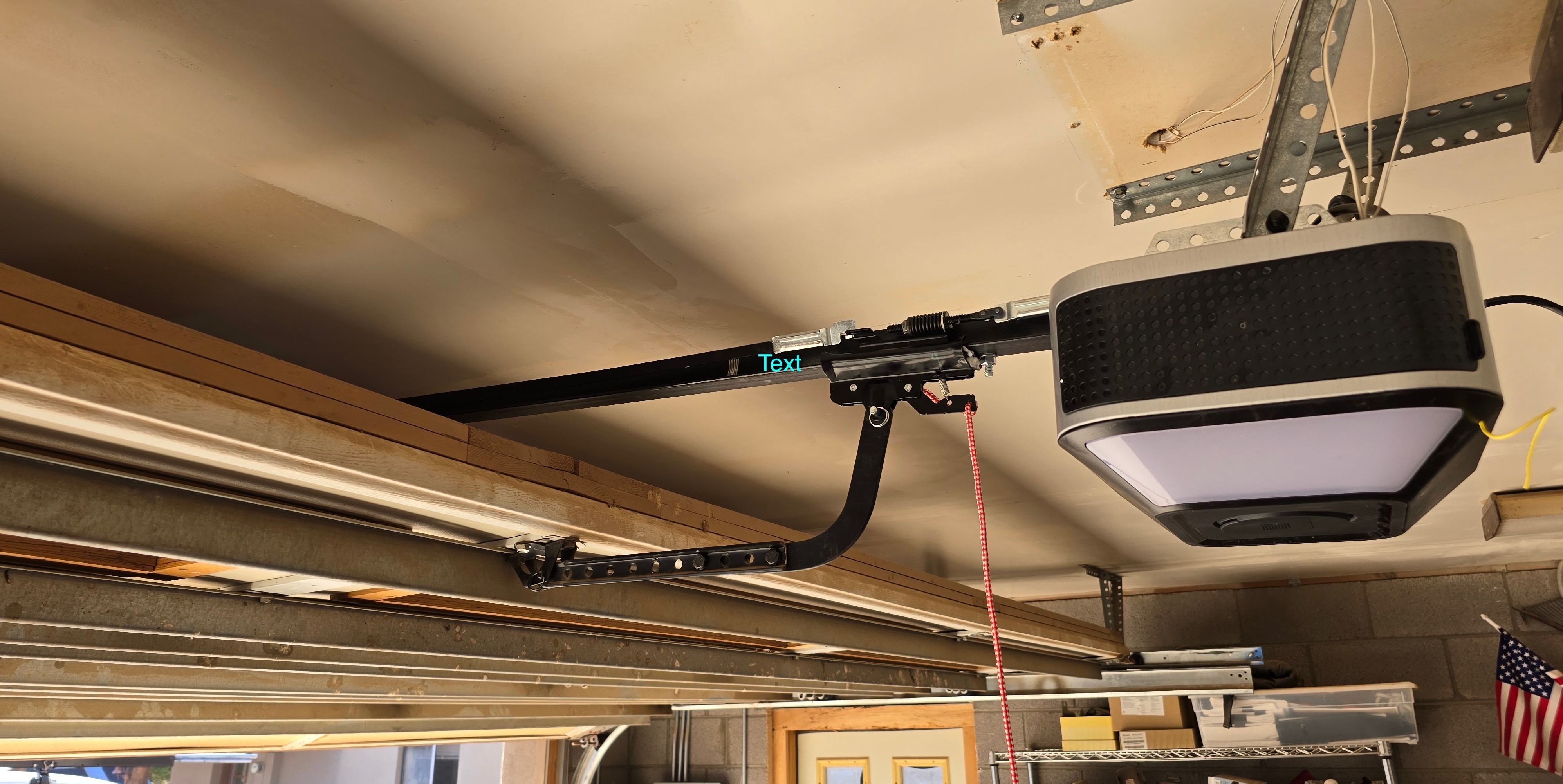
A running motor with no door movement usually points to a disconnected trolley, damaged belt or chain, failed sprocket, stripped gear, broken pulley, rail problem, or a garage door that cannot move safely.
The emergency-release cord may have disconnected the door from the moving carriage.
The motor may operate while a separated drive component no longer moves the trolley.
Some openers continue making motor noise while damaged internal gears fail to drive the sprocket.
A failed sprocket, shaft, pulley, or bearing can prevent normal movement through the rail.
Screw-drive and rail-based systems may run while a worn carriage fails to transfer movement to the door.
A broken spring, lock, bent track, off-track roller, or damaged section can keep the door closed while the opener strains.
A door that lifts several inches and stops may be too heavy for the opener, mechanically blocked, incorrectly balanced, or encountering resistance at a specific point.
The opener may lift the door slightly before the unsupported weight exceeds what the motor and drive system can move.
A cable problem can allow one side to rise differently, causing the door to bind or become crooked.
A slide lock, exterior lock, or other manual lock can hold the door closed while the opener attempts to lift it.
Bent track, a damaged roller, failed hinge, or shifted bracket may create resistance shortly after the door begins moving.
The programmed open position may be too low or the opener may be responding to a model-specific travel or force condition.
A bent top section, failed strut, damaged stile, or opener attachment can flex and stop movement.
Yes. Garage door springs counterbalance most of the door’s weight. When a spring breaks, the door may remain closed, open only a few inches, feel extremely heavy, or cause the opener rail and motor to strain.
A separated torsion-spring coil above the door is one of the most recognizable signs of failure.
The door may be difficult or unsafe to lift after the counterbalance system stops supporting its weight.
The opener may pull against a door that is far heavier than normal, placing stress on the rail, trolley, and mounting.
Cable, drum, or spring problems may cause one side to rise before the other.
The opener must transfer motor movement through several connected components. A failure anywhere in that path can leave the door closed even when the opener still makes noise.
A separated or stripped belt can stop trolley movement while the motor continues operating.
A loose, separated, or off-pulley chain may prevent movement and create slapping or rattling noises.
Internal gear material may wear away, leaving the motor running without turning the sprocket correctly.
A bent shaft, failed bearing, broken bracket, or separated sprocket can affect the complete drive system.
A failed pulley can release tension, misalign the belt or chain, and stop trolley movement.
A distorted rail can keep the trolley from traveling smoothly and may place abnormal load on the motor.
Pulling the emergency-release cord disconnects the door from the opener trolley on many systems. A manual slide lock can also prevent the door from opening even though the opener attempts to move it.
The motor and rail carriage may move while the door remains disconnected from the opener arm.
Re-engagement procedures differ by opener. The door and carriage may need to be positioned correctly before reconnection.
A manual lock through the vertical track can physically prevent the door from lifting.
Some doors have keyed locks or lock bars that must remain disabled when an automatic opener is used.
A damaged rope, handle, latch, carriage, or release mechanism may prevent proper engagement.
Garages without another entrance may require an exterior emergency release for access during power or opener failure.

A working opener cannot safely overcome a door that is locked, frozen, off track, bent, jammed, or mechanically unstable.
A displaced roller can twist the section and cause the door to bind immediately.
Impact, loose brackets, structural movement, or poor alignment can restrict roller travel.
A bent section or failed hinge can change the spacing and movement between door sections.
Water can freeze the bottom seal to the floor, leaving the opener pulling against a door that cannot lift.
Stones, tools, fasteners, hardened grease, or damaged track components may block roller movement.
Damaged reinforcement or opener attachment can allow the top section to bend instead of lifting the door.
These checks do not require adjusting springs, loosening cables, opening the motor housing, or forcing the door.
Confirm the opener is plugged in and check the related breaker, outlet, or GFCI device.
Test the wall control, remotes, and keypad separately to determine which devices respond.
Check the wall control for a lock or vacation indicator that may disable wireless controls.
Confirm a slide lock, keyed lock, or lock bar is not holding the door closed.
Check above the door for a visible gap in the torsion spring without touching the spring or related hardware.
Watch for crooked movement, a loose cable, off-track roller, flexing section, or shifting track.
Note whether it is silent, clicking, humming, grinding, or running normally without moving the trolley.
Do not continue testing a heavy, crooked, off-track, damaged, or partially unsupported door.
Schedule service when the door is heavy, crooked, off track, structurally damaged, supported by a loose cable, or unable to move smoothly after basic power and control checks.

Dynamic Door Service can determine whether the problem involves power, controls, a broken spring, cable, trolley, belt, chain, gear, rail, track, roller, lock, or damaged door section.
Select a question to view the answer.
Confirm the opener has power, compare the wall control and remotes, check for lock or vacation mode, inspect the manual door lock, and look for a visible broken spring or crooked door.
Possible causes include a broken spring, engaged door lock, jammed door, disconnected trolley, stripped gear, damaged belt or chain, failed sprocket, capacitor, motor, or another blocked component.
A broken spring, loose cable, heavy or unbalanced door, binding track, damaged roller, engaged lock, damaged section, or travel-setting issue can cause the opener to stop after lifting the door slightly.
Yes. The springs counterbalance the door’s weight. When a spring breaks, the door may become extremely heavy, remain closed, open only a few inches, or overload the opener.
No. A door with a broken spring can be extremely heavy and unstable. Do not attempt to lift it without trained help and proper control of the door.
The trolley may be disconnected, or the belt, chain, gear, sprocket, pulley, carriage, rail, or door hardware may be damaged.
Check the remote battery, programming, compatibility, radio interference, range, and the wall-control lock feature.
The opener carriage may travel along the rail without moving the door. Re-engagement procedures vary by opener and should follow the manual for the exact model.
Yes. Operating an automatic opener while the door is manually locked can damage the top section, opener arm, trolley, rail, drive system, or motor.
Yes. Water can freeze the bottom seal to the floor. Do not force the opener to pull the door free because the seal, bottom section, opener, or door hardware may be damaged.
It is safest to use the release while the door is fully closed. Use extreme caution with an open or partially open door because weak or broken springs may allow it to fall rapidly.
Yes. Dynamic Door Service diagnoses power, controls, springs, cables, rollers, tracks, sections, locks, trolleys, belts, chains, gears, sprockets, rails, and opener failures. Every visit includes a full safety inspection.
Dynamic Door Service will inspect the complete door and opener, identify what is preventing movement, and explain the safest repair option without high-pressure recommendations.

Copyright 2026. DYNAMIC DOOR SERVICE TX LLC. All Rights Reserved.


