Guide the Door
Roller wheels remain inside the tracks and help control the door’s path while opening and closing.








Compare noise, smoothness, durability, bearings, maintenance, heavy-door performance, warning signs, and replacement options so you can choose the correct rollers for your garage door.

Use the links below to compare roller materials, noise, bearings, durability, maintenance, applications, warning signs, upgrades, and replacement safety.
High-quality nylon rollers are generally the better choice for standard residential garage doors because they operate more quietly, transfer less vibration, and resist corrosion at the wheel. Steel rollers remain appropriate for certain commercial, high-use, heavy-duty, or specialized door systems when they are correctly rated for the application.
Roller material influences sound and corrosion resistance, but the bearing design, load rating, dimensions, track, hinges, installation, and door condition are equally important.

| Comparison | Nylon Rollers | Steel Rollers |
|---|---|---|
| Operating Sound | Generally quieter inside a steel track. | Typically produces more metal-on-metal sound. |
| Vibration | Usually transfers less vibration through the door. | May transmit more mechanical vibration. |
| Corrosion | The nylon wheel does not rust, although the stem and bearings may corrode. | The wheel, stem, and bearings may rust or corrode. |
| Wear Pattern | May crack, chip, flatten, or warp as it deteriorates. | May become worn, rough, loose, or lopsided. |
| Bearings | Available with bearings or in properly rated bearingless designs. | Available with open, shielded, or sealed bearing designs. |
| Residential Use | Usually preferred for quiet residential operation. | Common on basic, older, and utility-focused doors. |
| Heavy-Duty Use | Suitable when the roller is specifically rated for the load. | Frequently used in commercial and specialized applications. |
| Maintenance | Follow manufacturer guidance for the stem and bearing area. | May require more attention to bearings, corrosion, and lubrication. |
| Best Choice | Standard attached residential garages where quietness matters. | Selected heavy-duty, commercial, high-use, or specialized systems. |
Rollers guide the garage door through the vertical and horizontal tracks as the sections pivot around the curved portion of the track.
Roller wheels remain inside the tracks and help control the door’s path while opening and closing.
Roller stems move through hinges or carriers as each section changes angle through the curved track.
Properly sized wheels and bearings help the door move without dragging heavily against the track.
Correct rollers help limit shaking, binding, jerking, and unnecessary side-to-side movement.
Smooth movement reduces avoidable strain on hinges, tracks, sections, springs, cables, supports, and the opener.
Wheel diameter, stem length, load rating, bearings, track design, and door weight must be compatible.
Nylon rollers can still crack, chip, flatten, or warp. The stem and bearings are normally metal and may still wear or corrode.
Steel rollers normally create more metal-on-metal sound and may rust, develop bearing play, wear unevenly, or become lopsided.
The quietest and longest-lasting roller is not necessarily the one with the most advertised ball bearings. The entire roller design must be appropriate for the garage door.
Nylon generally creates less contact noise inside a steel track than a steel wheel.
Bearings can reduce friction between the wheel and stem, but they must be properly designed and rated.
A manufacturer-rated bearingless nylon roller can still perform correctly on an appropriate residential door.
A higher number can indicate a different construction, but it does not prove compatibility, quality, or useful service life.
Roller capacity should match the completed door weight, number of rollers, usage, track, and system design.
Bent tracks, loose hinges, worn carriers, and poor alignment can make any roller noisy or unstable.
Door size, weight, construction, daily cycles, track design, environment, and operating priorities determine the correct roller—not a simple rule that one material fits every door.
Quality nylon rollers are usually preferred for smooth and quiet operation in attached residential garages.
Properly rated nylon or steel rollers may be used depending on door weight, track, roller count, and manufacturer requirements.
Heavier construction requires rollers, hinges, tracks, springs, and supports designed for the completed door weight.
The roller and hardware system must account for frame construction, glass weight, door width, reinforcement, and track configuration.
Commercial systems may require heavier stems, higher load ratings, specialized bearings, and different track or roller designs.
Nylon wheels resist wheel rust, but steel stems, bearings, tracks, hinges, and fasteners still require inspection for corrosion.
Visually inspect the rollers while the door operates. Watch for wheel damage, stem movement, bearing noise, rust, track contact, looseness, and changes in the way the door moves.
Use only a product approved for the specific roller and door. Apply it only to locations identified by the manufacturer.
Heavy grease inside the track can collect dirt and interfere with normal roller movement.
Depending on the design, lubrication may be applied at the bearing, collar, or point where the shaft meets the wheel.
Roller maintenance should include the tracks, hinges, fasteners, sections, springs, cables, opener, balance, and safety systems.
Roller wear may develop gradually. The door may continue moving while becoming louder, rougher, less stable, and harder on other components.
A damaged wheel, worn bearing, bent track, or metal contact may create grinding or scraping sounds.
Excessive wheel or stem play can allow the door to shake or move unpredictably inside the tracks.
Nylon wheels may crack, chip, warp, or develop flat areas that interrupt smooth travel.
Steel rollers can wear unevenly and develop an irregular shape or rough bearing movement.
Corrosion, loose bearings, and stem movement can create noise and reduce control.
A roller outside the track may involve roller failure, a bent track, loose hinge, impact damage, cable problems, or door misalignment.

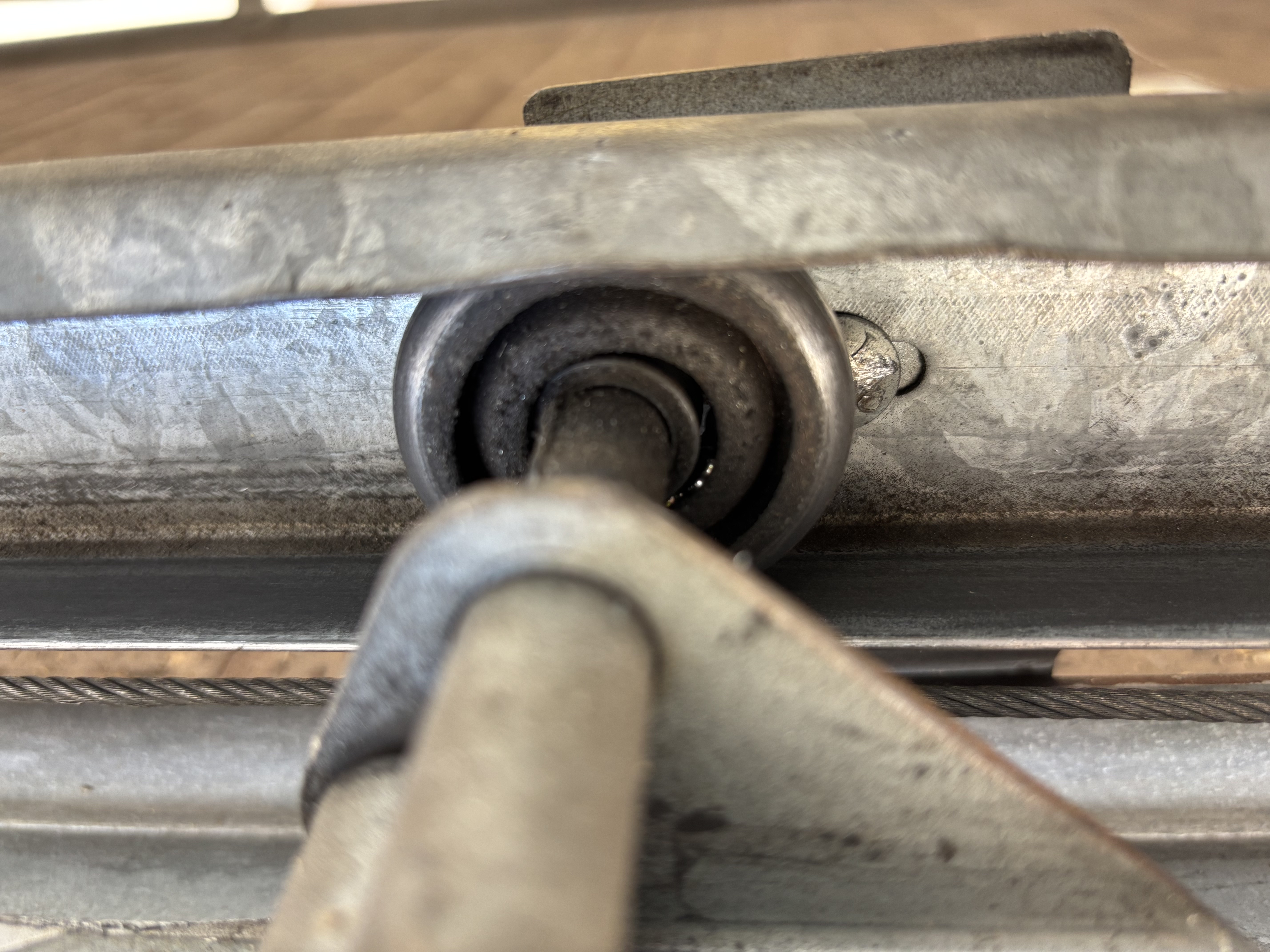
Many residential steel rollers can be upgraded to compatible nylon rollers. The replacement roller must match the track, hinge or carrier, stem length, wheel diameter, load requirements, and garage door design.
Check roller size, stem length, tracks, hinges, carriers, sections, brackets, door weight, and movement.
Choose a roller that meets the load and use requirements of the completed garage door.
Bent hinges, damaged carriers, loose tracks, and worn fasteners may need correction at the same time.
Replacing the complete matched set may provide more consistent movement than mixing severely worn and new rollers.
Confirm that each roller remains correctly positioned through the vertical, curved, and horizontal tracks.
Test manual movement, balance, opener operation, reversal systems, and the complete door after replacement.
A quality, correctly rated nylon roller is usually the best choice for a standard residential garage door—especially when the garage is attached to the home and quieter operation is important.
Some upper and center rollers may appear simple to access, but the door is large, heavy, and connected to a spring-and-cable system. The bottom roller area requires special caution because the bottom bracket commonly holds the lift cable.
The lift cable may remain under significant spring tension even when the garage door is closed and not moving.
Improper track bending can weaken the track, change alignment, and allow the roller or door to leave its normal path.
A door can move unexpectedly when rollers, hinges, tracks, or supports are loosened.
Roller problems may appear alongside broken springs, loose cables, damaged brackets, or poor balance.
Incorrect diameter, stem length, load rating, or bearing design can create new movement and alignment problems.
After replacement, the door should be manually tested, balanced, reconnected to the opener, and safety-tested.
Dynamic Door Service can inspect the rollers, tracks, hinges, sections, springs, cables, balance, and opener before recommending the correct repair.
Roller wear can be caused or accelerated by problems elsewhere in the garage door system. We inspect the complete door before recommending parts or repairs.
Select a question to view the answer.
Quality nylon rollers are usually preferred for standard residential doors because they operate more quietly and transfer less vibration. Steel rollers remain appropriate for certain commercial, high-use, heavy-duty, and specialized door systems.
Properly rated nylon rollers are generally quieter than steel rollers. Actual noise also depends on the bearings, tracks, hinges, door alignment, spring balance, sections, opener, and installation.
Yes, when the roller is specifically rated for the door’s weight, track, roller count, operating cycles, and construction. Material alone does not determine capacity.
Not automatically. Service life depends on roller quality, bearings, load rating, use, track alignment, environment, maintenance, and door condition. Steel can wear or corrode, while nylon can crack or warp.
No. Bearing count alone does not establish quality or compatibility. A properly rated bearingless roller may be suitable for one door, while another door may require a heavier bearing-supported design.
Maintenance depends on the roller design and manufacturer. Use only an approved garage-door lubricant and apply it to the bearing, collar, or shaft location identified in the instructions. Do not randomly coat the wheel or track.
Many residential steel rollers can be upgraded to compatible nylon rollers. The wheel diameter, stem length, load rating, hinge, track, door weight, and application must be confirmed first.
Replacing the complete matched set may provide more consistent movement when the rollers have similar age and wear. The hinges, tracks, and other related hardware should also be inspected.
Worn rollers can contribute to unstable movement, but an off-track door may also involve bent tracks, loose hinges, impact damage, cable problems, spring failure, or poor alignment.
Roller replacement involves a large moving door and spring-loaded hardware. The bottom roller bracket must not be removed while the system remains under tension because it commonly holds the lift cable.
Warning signs include grinding, squeaking, wobbling, excessive stem movement, rust, cracked nylon, lopsided steel wheels, flat spots, jerking, or rollers leaving the track.
Yes. Dynamic Door Service inspects and replaces residential and commercial garage door rollers. Every service visit includes a full safety inspection of the complete garage door system.
Dynamic Door Service replaces worn nylon and steel rollers, corrects related track and hinge problems, evaluates door balance, and completes a full safety inspection before returning the system to service.

Copyright 2026. DYNAMIC DOOR SERVICE TX LLC. All Rights Reserved.


