The Trolley Moves but the Door Does Not
This usually directs attention toward the emergency-release connection, trolley latch, door arm, door bracket, or attachment to the top section.
Check the connection between the trolley and door.







Learn how to separate a disconnected trolley from a broken belt, chain, gear, sprocket, spring, lock, track, or garage-door problem—and when continued operation could cause more damage.

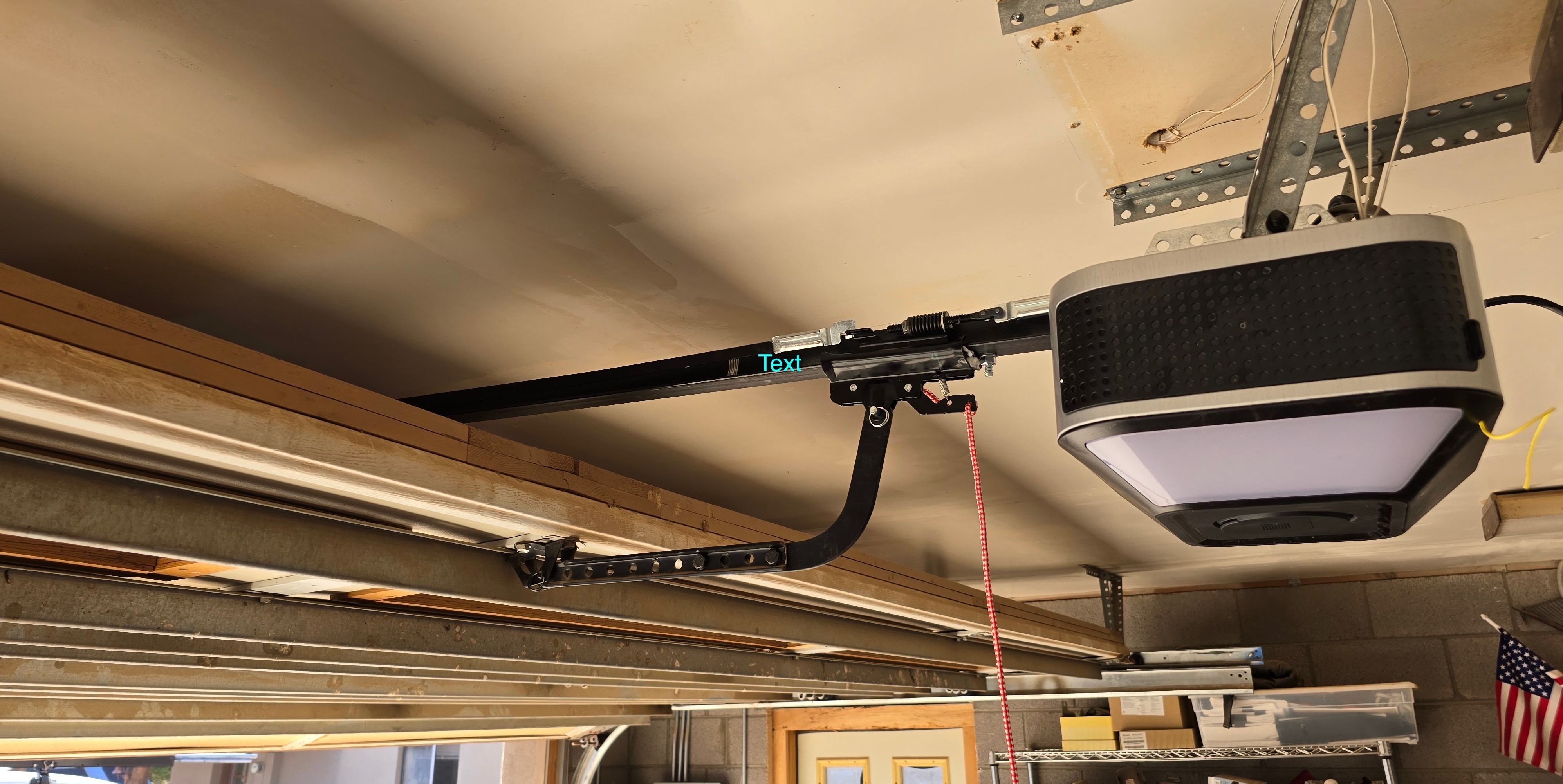
The most useful first step is determining whether the opener trolley moves along the rail and whether the garage door can move safely.
If the opener runs but the garage door does not move, the door may be disconnected from the opener trolley after the emergency release was pulled. Other causes include a broken or displaced belt or chain, stripped gear, failed sprocket or pulley, worn screw-drive carriage, disconnected door arm, engaged door lock, broken spring, off-track roller, bent track, damaged section, or another condition preventing the door from moving safely.
Observe the trolley, belt or chain, door arm, and garage door from a safe position. Do not stand beneath the door or touch moving parts.
| What You Observe | Likely Area | Recommended Next Step |
|---|---|---|
| Trolley moves, but the door remains still | Disconnected trolley, emergency release, disconnected door arm, or failed attachment. | Inspect the trolley connection and door arm without standing beneath the door. |
| Motor runs, but the trolley does not move | Broken belt or chain, stripped gear, failed sprocket, pulley, carriage, coupler, or rail component. | Stop repeated operation and identify the drive-system failure. |
| Opener hums briefly and stops | Broken spring, engaged lock, jammed door, motor or capacitor problem, or trolley at the stop bolt. | Check the spring and door lock before operating again. |
| Door rises a few inches and stops | Broken spring, heavy door, cable issue, binding track, damaged roller, or opener overload. | Stop if the rail flexes or the door appears unusually heavy. |
| Belt or chain hangs loose | Broken drive component, failed pulley, sprocket, tensioner, connector, or rail assembly. | Disconnect power and avoid additional cycles. |
| Trolley and door move unevenly or jerk | Rail damage, poor tension, worn carriage, binding door, damaged gear, or attachment problem. | Have the opener and garage door inspected together. |
| Door is crooked or one side lifts first | Cable, drum, spring, roller, track, hinge, or section damage. | Stop immediately and keep the area clear. |
| Opener works after the door is disconnected | The opener may be functional, while the garage door is heavy, locked, jammed, or mechanically damaged. | Do not reconnect until the door problem has been corrected. |
From a safe position on the garage floor, watch one brief opener cycle. Do not touch the rail, trolley, belt, chain, door arm, or moving door.
This usually directs attention toward the emergency-release connection, trolley latch, door arm, door bracket, or attachment to the top section.
Check the connection between the trolley and door.This usually directs attention toward the belt, chain, gear, sprocket, pulley, carriage, coupler, drive shaft, or rail system.
Stop repeated cycles to prevent additional damage.The opener may be encountering a heavy, locked, jammed, off-track, or mechanically binding garage door.
Inspect the door before adjusting opener force.The door may already be disconnected from the opener and operating manually. Reconnect it only after confirming the door is balanced and stable.
Follow the exact opener manual for re-engagement.On many ceiling-mounted openers, pulling the red emergency-release handle disconnects the garage door from the opener carriage. The motor and inner trolley may continue moving while the door remains stationary.
The door may have been disconnected during a power outage, manual operation, maintenance, or an earlier service visit.
The door and carriage may not be positioned correctly for the latch to reconnect.
A worn or broken latch, spring, lever, rope, handle, or carriage component can prevent secure engagement.
Some systems reconnect automatically, while others require the release lever or carriage to be positioned manually.
Belt- and chain-drive openers use the drive assembly to move the trolley through the rail. If that connection breaks or comes off a pulley or sprocket, the motor may continue running without moving the door.
The reinforced belt may separate, strip, tear, or disconnect from the trolley connector.
A loose chain can leave the sprocket, pulley, or rail guide and stop trolley movement.
A worn component, loose adjustment, damaged tensioner, or failed pulley can allow the drive to sag or slap the rail.
The belt or chain may remain intact while its master link, clip, connector, or trolley attachment fails.
A cracked, seized, tilted, or separated pulley can release drive tension and misalign the complete assembly.
A broken spring, locked door, or mechanical bind may overload the drive system and damage the belt, chain, sprocket, or gear.
The opener may sound normal even when an internal or rail-mounted component no longer transfers motor movement to the trolley.
Worn gear teeth can allow the motor to spin while the drive sprocket barely moves or remains still.
A failed sprocket, shaft, bracket, bearing, or mounting point can disconnect the motor from the chain or belt.
A damaged pulley can release tension, tilt the drive assembly, or allow the belt or chain to leave its normal path.
A failed clip, link, rack, or connector may prevent movement even when the main drive still looks intact.
A worn carriage can allow the screw to rotate without moving the door arm through the rail.
Some screw-drive systems use a coupler between the motor and drive screw that can crack, strip, or separate.
A distorted, separated, or poorly supported rail can stop the trolley or place excessive load on the drive components.
A motor may hum or start without producing enough controlled movement when an electrical component has failed.
The curved and straight opener arms connect the moving trolley to the garage door. A missing pin, failed bracket, torn top section, or loose reinforcement can interrupt that connection.
A pin or retaining clip may fall out, leaving the opener arm disconnected from the trolley or door bracket.
Excessive resistance from a locked, heavy, or jammed door can bend or distort the opener arm.
Fasteners can loosen or tear through the door when the attachment is not properly reinforced.
The top section may fold, crack, or pull inward instead of lifting the complete garage door.
A damaged stile, strut, reinforcement bracket, or fastening point can allow excessive flexing.
Poor positioning can place abnormal force on the top section, trolley, rail, and opener attachment.
A functional opener cannot safely lift a garage door that remains locked, frozen to the floor, blocked, or mechanically jammed.
A manual slide lock can physically hold the door closed while the opener strains against it.
Keyed locks and center lock bars must remain disabled when an automatic opener controls the door.
Water can freeze the bottom seal to the floor and prevent the door from lifting.
Tools, fasteners, debris, damaged hardware, or a shifted track can block roller movement.
Impact damage can cause a section or track to bind as soon as the opener begins lifting.
A failed roller bearing, hinge, pulley, shaft bearing, or other component can restrict door movement.

Garage door springs counterbalance most of the door’s weight. When a spring breaks or the door is poorly balanced, the opener may run, hum, lift the door only a few inches, or damage its own drive system.
A separated torsion-spring coil above the door is a common sign that the spring has broken.
The door may become difficult or unsafe to lift after losing proper spring support.
Excessive door weight may bend the opener rail or pull against the top section and reinforcement.
Spring, cable, or drum problems may allow one side of the door to rise before the other.
An off-track, crooked, bent, or damaged garage door can stop opener movement even when the motor and drive system still operate.
A displaced roller can twist a section and stop the garage door from moving normally.
A cable problem can allow one side of the door to rise or fall differently from the other.
Impact damage or poor alignment can create a restriction that the opener cannot safely overcome.
Bent sections and failed hinges can change roller spacing and cause the door to bind.
Movement in the track or support brackets can create sudden resistance during operation.
A seized, broken, or badly worn roller can drag or lock inside the track.

Repeated cycles can overload components that were not originally damaged, especially when the garage door is locked, heavy, off track, or unable to move.
Repeated stalled cycles can heat electrical components and shorten their remaining service life.
A blocked door can strip gears, bend shafts, or damage the sprocket assembly.
Excessive load can stretch, separate, strip, or displace the drive assembly.
The rail can flex while the trolley, carriage, stop bolt, or connection points absorb abnormal force.
The opener arm may pull the top section inward when the rest of the door cannot move.
A crooked or off-track door may become more unstable with every attempted cycle.
These checks do not require opening the motor housing, adjusting springs, loosening cables, or touching the moving drive system.
From the floor and clear of the door, observe whether the trolley moves during one brief opener cycle.
Look for a disconnected arm, missing pin, loose bracket, or damaged top-section attachment.
Check visually for separation, excessive slack, a hanging drive, or a component outside its normal path.
Confirm that a slide lock, keyed lock, or lock bar is not holding the garage door closed.
Check above the door for a visible gap without touching the spring, shaft, drums, cables, or brackets.
Stop if the door is crooked, one side is lower, a cable is loose, or a roller is outside the track.
Note whether the opener runs normally, hums briefly, clicks, grinds, rattles, or stops abruptly.
Use the opener’s exact model and parts diagram before considering any replacement component.
Compare safety, age, parts availability, repeated failures, features, repair history and long-term value.
Schedule professional service when the drive system is damaged, the door is heavy or unstable, the correct repair is unclear, or the opener continues running without transferring movement correctly.

Dynamic Door Service can determine whether the problem involves the trolley, belt, chain, gear, sprocket, rail, door arm, spring, lock, tracks, rollers, cables, or the garage door itself.
Select a question to view the answer.
The door may be disconnected from the trolley, or the opener may have a broken belt, chain, gear, sprocket, pulley, carriage, coupler, rail, or door-arm connection. The garage door may also be locked, jammed, off track, or too heavy because of a broken spring.
Watch the rail from a safe position during one brief opener cycle. If the inner trolley or carriage moves but the garage door and door arm remain still, the emergency-release connection or attachment may be disengaged or damaged.
Reconnection procedures vary by opener model. Some systems reconnect automatically, while others require the release lever or carriage to be positioned before running the opener. Use the manual for the exact model and do not force the connection.
The motor may run while the trolley remains still. You may also see a separated belt, hanging chain, excessive slack, a drive component off its pulley or sprocket, or hear rattling, slapping or grinding.
Possible causes include a broken spring, engaged manual lock, jammed door, trolley at the stop bolt, failed capacitor, damaged motor, or a drive-system component that cannot move under load.
Yes. A broken spring can leave the garage door too heavy for the opener. The opener may run, hum, lift the door only a few inches, bend the rail, or damage the belt, chain, gear or sprocket.
Safety reversing sensors are primarily designed to affect closing, not normal opening. When a door will not open, check the trolley, drive system, spring, lock, track, rollers, cables and garage door condition.
Yes. The trolley may move normally along the rail while a missing pin, broken clip, bent arm, loose bracket or damaged top-section attachment prevents movement from reaching the garage door.
No. Repeated operation can overheat the motor, strip gears, damage the sprocket, break the belt or chain, bend the rail, tear the top section, or worsen an off-track condition.
It is safest to use the emergency release while the garage door is fully closed. An open or partially open door can fall rapidly if its springs are weak or broken.
Repair may make sense when the opener is otherwise dependable and the exact compatible part is available. Replacement deserves consideration when several major components are worn, parts are obsolete, safety performance is unreliable, or repair approaches a large portion of replacement value.
Yes. Dynamic Door Service diagnoses trolleys, emergency releases, belts, chains, gears, sprockets, pulleys, rails, door arms, springs, cables, locks, tracks, rollers and garage-door problems. Every visit includes a full safety inspection.
Dynamic Door Service will inspect the opener and garage door together, identify where movement is being lost, and explain the safest repair or replacement option without high-pressure recommendations.

Copyright 2026. DYNAMIC DOOR SERVICE TX LLC. All Rights Reserved.


