Often associated with private driveways, homes, ranch entrances and lower vehicle throughput.
24/7 EMERGENCY SERVICE AVAILABLE






Automatic Gate Learning Center
Residential vs. Commercial Gate Operators
Choosing the right automatic gate operator depends on more than whether a property is called residential or commercial. Gate size and weight, traffic, expected cycles, site conditions, power, access control, security and operator ratings should all be considered.
Residential Gates
Commercial Gates
Gate Size & Weight
Traffic
Access Control
Safety

Residential
Match the Operator to the Property
Commercial
Match Capacity to Actual Demand
Quick Answer
What Is the Difference Between Residential and Commercial Gate Operators?
The biggest difference is the application the operator is designed
and rated to handle.
Residential operators may be designed around private-driveway gate sizes and lower traffic levels, while commercial operators may support heavier gates, greater traffic demand, more complex access-control requirements or higher-use applications. However, there is no single dividing line: some operator models are rated for both residential and commercial use. Always match the exact operator to the gate and site.
On This Page
Residential vs. Commercial Comparison
01 What the Labels Mean
02 Quick Comparison
03 Residential Operators
04 Commercial Operators
05 Gate Size & Weight
06 Traffic & Cycles
07 Duty & Capacity
08 Power & Backup
09 Access Control
10 Security & Traffic
11 Safety
12 Maintenance
13 Residential Fit
14 Commercial Fit
15 Choosing an Operator
16 FAQ
Application Matters More Than the Label
Residential
Commercial
Overlap Exists
Residential and Commercial Are Not Universal Specifications
Manufacturers rate individual gate-operator models for particular applications. Some are intended specifically for residential use, some cover residential and light-commercial properties, and others are built for commercial, industrial or high-use environments.
Often involves greater traffic, larger gates, business access requirements or more demanding operating conditions.
Many operator models are approved for more than one application category, so the exact model rating matters.
At a Glance
Residential vs. Commercial Gate Operators: Quick Comparison
| Consideration | Residential Application | Commercial Application |
|---|---|---|
| Typical Property | Homes, private drives, ranches and similar entrances. | Businesses, communities, facilities, storage, industrial or higher-use entrances. |
| Vehicle Traffic | Often lower, but property-specific. | May involve significantly greater or more frequent traffic. |
| Gate Size | Varies with the property and gate. | May involve larger or heavier gates, but not always. |
| Operator Capacity | Must match the actual gate and expected use. | Must match the actual gate and expected use. |
| Access Control | May use remotes, keypads, smart access and vehicle controls. | May require more users, credentials, entry systems or integrated controls. |
| Power | AC, battery/DC or solar-capable systems may be appropriate. | Power configuration depends on operator, site and system demand. |
| Safety | Requires proper safety design and entrapment protection. | Requires proper safety design and entrapment protection. |
| Best Choice | Model-specific. | Model-specific. |
Private Property Applications
Gate Compatibility
Expected Use
Power Options
Access & Safety
What to Look for in a Residential Gate Operator
A residential operator should still be selected around the actual gate, property and expected use rather than simply choosing the smallest available system.
The operator must match the gate type, length, weight and movement.
Consider household traffic, visitors, deliveries and other regular gate cycles.
AC, battery-based and solar-capable configurations may be available.
Remotes, keypads, vehicle controls and safety equipment should work as a complete system.
Higher-Demand Property Applications
Traffic Demand
Gate Capacity
Access Management
Operating Environment
What to Look for in a Commercial Gate Operator
Commercial selection should begin with actual traffic, gate requirements, site conditions, access-control needs and the manufacturer's rated application.
Evaluate how often the gate is expected to cycle throughout the operating day.
Larger or heavier gates may require higher-capacity equipment.
Businesses and communities may need more users, credentials and entry controls.
Site conditions, security needs and required availability should influence selection.
Operator Capacity Comes First
Gate Length and Weight Can Change the Operator Class
A private residential property can still have a large, heavy gate, while a commercial property may have a relatively modest entrance. The operator should therefore be selected from the actual gate specifications and the manufacturer's ratings—not the property label alone.
Count Real Gate Use
Normal Daily Traffic
Peak Periods
Future Demand
Vehicle Traffic Can Matter More Than Residential vs. Commercial
A gate serving a single home may cycle relatively few times per day, while an apartment community, storage facility, business or managed entrance may experience substantially more vehicle movement.
Estimate typical entries and exits rather than only peak occasions.
Consider shift changes, school traffic, tenant traffic or other concentrated use.
Planned growth or changing property use can affect operator selection.
Use the Manufacturer's Rating
Do Not Assume “Commercial” Automatically Means Better
Higher-capacity equipment is appropriate when the gate and application require it. Oversimplifying the choice into residential versus commercial can overlook important differences between operator models.
Verify the exact operator's approved application, gate length, gate
weight, operating demand, power requirements and compatible safety
equipment before installation.
Power Is a Separate Design Decision
AC Supply
Battery / DC
Solar Charging
Residential and Commercial Operators Can Use Different Power Architectures
Suitable where electrical service is available and compatible with the selected operator.
Some operators use batteries for normal operation, backup power or both.
Compatible residential and commercial applications may use solar where system demand and site conditions permit.
More Users Can Mean More Complex Controls
Access Control Can Be Simple or Highly Managed
A residential entrance may need only a few remotes or a keypad, while commercial or community properties may require larger credential groups, telephone entry, managed access, connected controls or multiple entry methods.
Remotes
Keypads
Cards & Fobs
Telephone Entry
Connected Access
Vehicle Detection
Read the Gate Access Control Guide →
Think Beyond the Operator Box
Security and Traffic Requirements Change by Property
Residential
Residential systems may prioritize controlled driveway access, convenience, visitor access and integration with the home's entrance.
Commercial
Commercial properties may need to manage greater vehicle throughput, employee or tenant credentials, delivery traffic and more complex perimeter-access requirements.
Both Are Powered Vehicular Gate Systems
Commercial Does Not Mean Different Safety Principles
Residential and commercial automatic vehicular gates both require evaluation of the actual moving gate, operator, entrapment zones, pedestrian exposure and appropriate safety devices. Higher traffic does not replace or reduce those requirements.
Read the Automatic Gate Safety Guide →
Usage Affects the Maintenance Picture
Physical Gate
Operator & Power
Controls & Safety
Read the Automatic Gate Maintenance Guide →
Maintain the Complete Gate System
Maintenance should account for the physical gate, operator, power system, access controls and safety equipment regardless of application. High-use systems may deserve closer attention because they accumulate operating cycles more quickly.
Check gate movement, hardware, alignment and resistance.
Inspect the operator, batteries, charging equipment and electrical connections as applicable.
Keep access-control and safety equipment operating as intended.
Residential Equipment May Fit When...
The Gate and Application Match the Operator Rating
The operator is approved for the gate's size and weight.
Expected vehicle traffic fits the intended application.
The selected power configuration fits the property.
Access-control requirements are compatible with the operator.
The complete safety system can be installed correctly.
The manufacturer approves the model for the intended property use.
Commercial Equipment May Fit When...
Greater Demand Requires Greater Rated Capability
The gate exceeds the capacity of suitable residential-only operators.
Vehicle throughput is significantly higher.
The property requires a higher-use or continuous-duty operator.
Access-management requirements are more complex.
The application requires equipment rated for commercial use.
Site and security requirements justify a more demanding operator class.
Start With the Application
Step 1
Evaluate the Gate
Step 2
Evaluate the Application
Step 3
Evaluate the Complete System
Choose the Operator From the Actual Requirements
A good operator selection process should combine the physical gate, expected vehicle traffic and the rest of the access system.
Swing or slide, length, weight, condition, movement and resistance.
Vehicle throughput, property type, operating schedule, security and site conditions.
Power, batteries, access control, vehicle detection and safety equipment.
Operator Selection • East Texas
Gate Requirements
Application
Complete System
Not Sure What Class of Gate Operator Your Property Needs?
Dynamic Door Service can evaluate the gate, expected traffic, operator requirements, power, access controls, safety equipment and property conditions before recommending an automatic gate system.
Type, length, weight, movement, condition and hardware.
Residential, commercial, community, ranch or other property demand.
Operator, power, access control, vehicle detection and safety equipment.
Common Questions
Residential vs. Commercial Gate Operator FAQ
What is the difference between a residential and commercial gate operator?
The difference depends on the individual operator and its approved
application. Commercial models may support greater gate capacity,
traffic demand or more demanding applications, while some operators
are rated for both residential and commercial use.
Does every business need a commercial gate operator?
Not simply because the property is a business. The operator should
be selected according to the gate, expected traffic, application,
manufacturer ratings, access requirements and site conditions.
Can a home need a commercial gate operator?
A residential property may require a higher-capacity operator if the
gate size, weight, usage or other application requirements exceed the
capabilities of appropriate residential-only equipment.
Are commercial gate operators stronger than residential gate operators?
Some commercial or industrial models are designed for heavier gates
or more demanding use, but strength and capacity are model-specific.
Compare the manufacturer's ratings for the exact operator.
Do commercial gate operators open faster?
Not necessarily. Gate speed depends on the operator model, gate type,
gate geometry and application. Commercial classification alone does
not determine opening speed.
Can residential and commercial gate operators use solar power?
Solar-capable operators are available for multiple application types.
Compatibility depends on the exact operator, gate demand, sunlight,
battery system and connected equipment.
Do commercial gate operators require battery backup?
Backup configuration depends on the operator and application.
Many modern gate operators include or support batteries, but the
exact requirements and capabilities are model-specific.
Do commercial gates need different access controls?
Commercial properties may require more users, credentials, entry
systems or connected controls, but both residential and commercial
systems can use compatible keypads, remotes and other access-control
equipment.
Does gate weight determine whether I need a commercial operator?
Gate weight is one important factor, but gate length, movement,
traffic, operator ratings, site conditions and the intended application
should also be considered.
Does a high-traffic property need a different gate operator?
Higher vehicle throughput can require an operator designed for
greater operating demand. The expected traffic and duty requirements
should be considered when selecting the model.
Are residential and commercial automatic gates subject to safety requirements?
Both require proper evaluation of the gate, operator, entrapment
zones, pedestrian exposure and compatible safety devices for the
actual installation.
Can Dynamic Door Service install residential and commercial gate operators?
Yes. Dynamic Door Service installs and services automatic gate
systems throughout its East Texas service area and can evaluate
residential and commercial operator options based on the gate,
property and complete access system.
Residential & Commercial Automatic Gates • East Texas
Need the Right Gate Operator for Your Property?
Dynamic Door Service installs and services residential and commercial automatic gate systems throughout East Texas. We can evaluate the gate, traffic, property, power, access controls and safety requirements before recommending an operator.
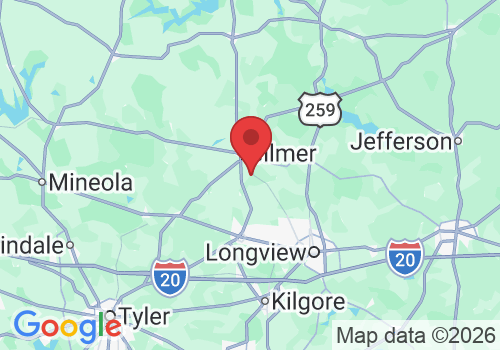
These are featured service-area pages. Dynamic Door Service serves
many surrounding East Texas communities. Call 903-364-6364 to confirm
service for your property.
Hours:
Mon – Sat 8:00am-6:00pm
Sunday- Emergency Service Only
24/7 Emergency Service Available


Copyright 2026. DYNAMIC DOOR SERVICE TX LLC. All Rights Reserved.